
How to Clean and Care for Your Tiles
How to clean and care for your tiles
Tiles are designed to be practical and hard-wearing, but the right care will help keep them looking their best for years to come. The best cleaning method depends on the material and finish, so always check the manufacturer's recommendations for your particular tile.
Everyday cleaning
For most porcelain and ceramic tiles, regular vacuuming or sweeping will remove dust and grit before it has a chance to build up.
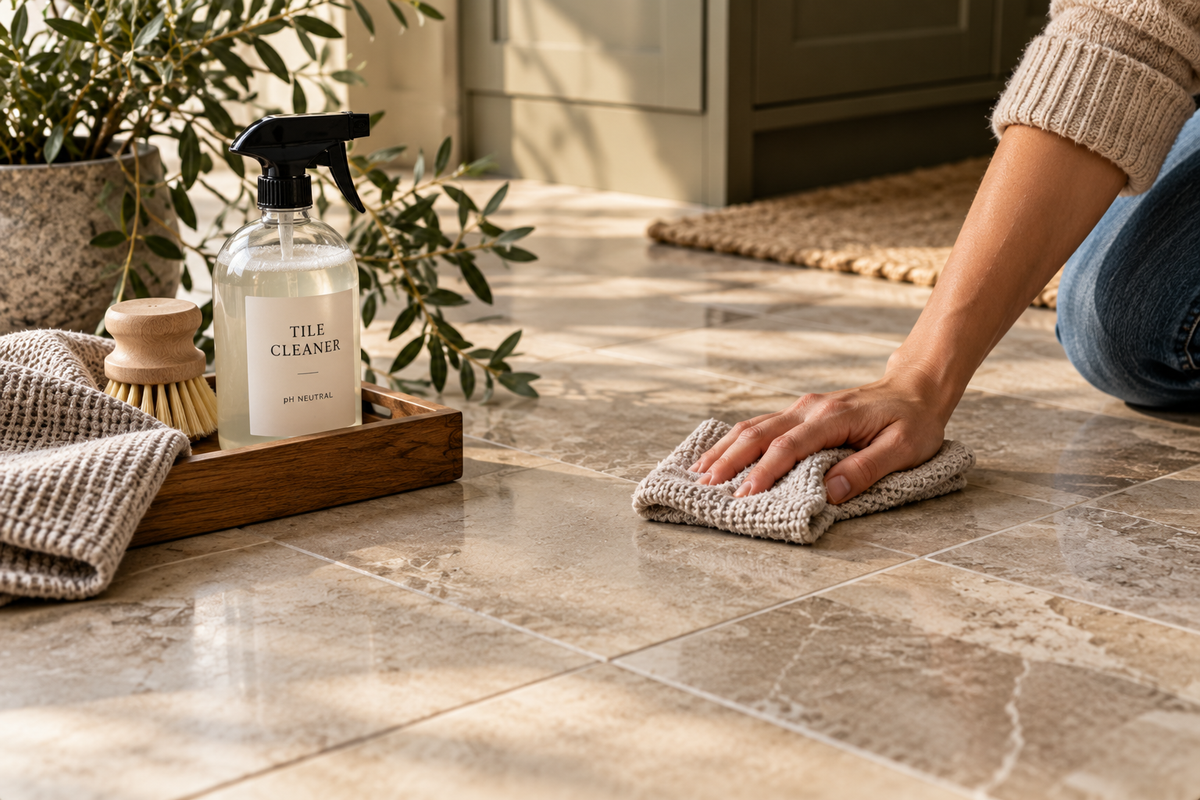
For routine washing, warm water and a suitable pH-neutral tile cleaner are usually all that's required. Use the cleaner according to its instructions rather than assuming that a stronger solution will give a better result.
After cleaning, changing the water when it becomes dirty can help prevent residue being spread back across the floor.
Be careful with cleaning products
Not every household cleaner is suitable for every tiled surface.
Strong acidic or alkaline products can potentially affect grout and certain tile materials or finishes. Abrasive cleaners and scouring pads may also damage more delicate surfaces.
Natural stone requires particular care and should be cleaned with products specifically suitable for the type of stone.
If you're unsure, check the manufacturer's care instructions or test a product on an inconspicuous area first.
Looking after grout
Grout can collect dirt more readily than the tile itself, particularly in busy kitchens, hallways and bathrooms.
Regular cleaning with a suitable grout cleaner and a soft brush can help prevent dirt from becoming ingrained. Avoid excessively aggressive scrubbing or unsuitable chemicals that could damage the grout.
Good ventilation is also particularly important in bathrooms and other areas where moisture regularly builds up.
Deal with spills promptly
Wiping up spills as they happen makes everyday maintenance much easier.
This is especially important with natural stone and other potentially absorbent surfaces, where substances may stain if they're allowed to sit for too long.
Protect tiled floors
Small preventative measures can make a difference over time. Entrance mats can help catch grit before it reaches a tiled floor, while protective pads beneath furniture can reduce the risk of marks or scratches.
When moving heavy furniture, lift it rather than dragging it across the tiles.
Keep some spare tiles
It's worth keeping a few tiles from your original installation somewhere safe.
If a tile is accidentally damaged years later, having a spare from the original batch can make replacement much easier, particularly if the range has since changed or been discontinued.
Need advice?
If you're unsure how to care for a particular tile or flooring product, speak to our team before using an unfamiliar cleaner.
Visit our Bury showroom and we'll help you understand the appropriate care and maintenance for the products you've chosen.
Leave a comment
This site is protected by hCaptcha and the hCaptcha Privacy Policy and Terms of Service apply.