
How to Measure a Room for Tiles
How to measure a room for tiles
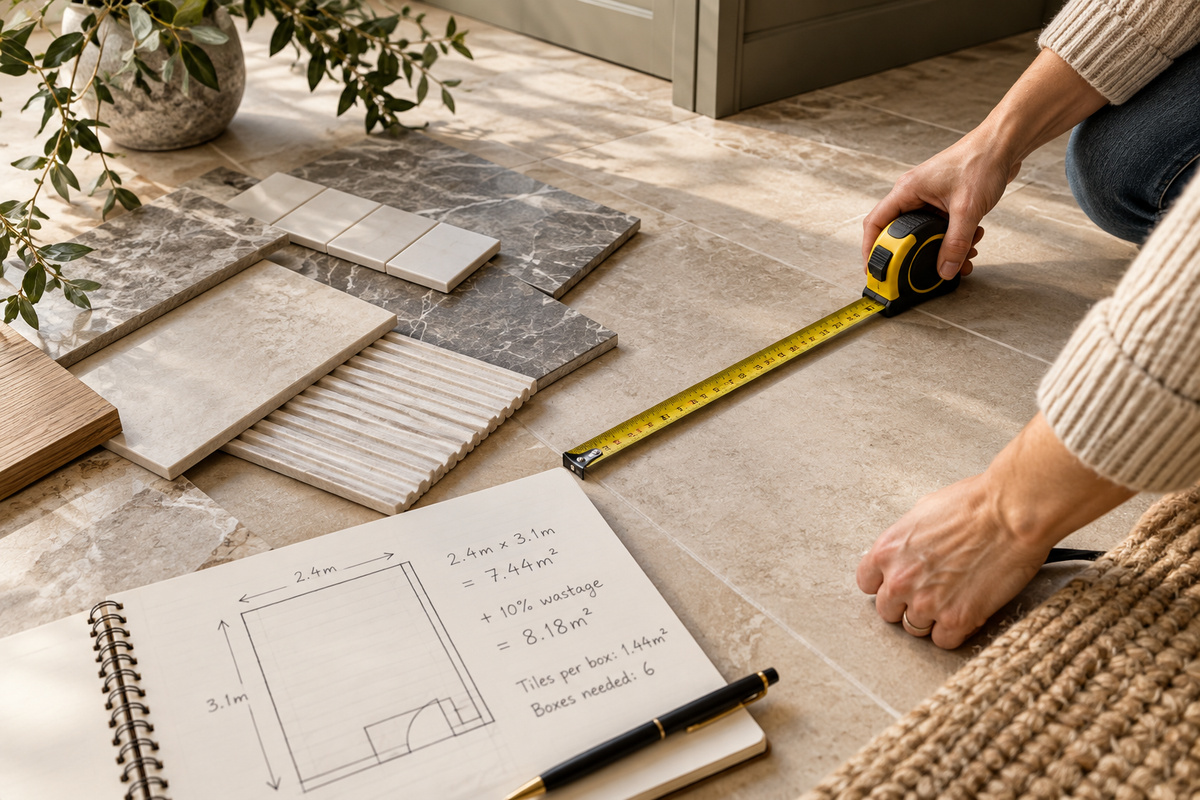
Getting your measurements right is one of the most important steps when planning a tiled room. Accurate measurements help you order enough tiles for the job while avoiding unnecessary waste and expense.
Measure the area
For a straightforward rectangular floor, measure the length and width of the room in metres, then multiply the two figures together.
For example:
4m × 3m = 12m²
For walls, measure the width and height of each area you intend to tile and multiply them together. Add the individual areas together to find your total square metre requirement.
Break complicated rooms into sections
Not every room is a perfect rectangle. If your floor or wall has alcoves, chimney breasts or other changes in shape, divide it into smaller rectangles.
Measure each section separately, calculate its area and then add the figures together. This is usually much easier and more accurate than trying to calculate an irregular shape in one go.
Allow for doors and windows
When measuring walls, large doors and windows can be deducted from the overall area.
For smaller openings, however, it can often be useful to leave some allowance rather than calculating everything too tightly, particularly when cuts will be required around the opening.
Don't forget wastage
You should order more tiles than the exact area you've measured. Extra tiles are needed to allow for cuts, breakages and variations in the laying pattern.
As a general starting point, around 10% extra is commonly allowed for a straightforward installation.
More complex layouts, such as diagonal patterns or herringbone, may require a larger allowance. Your installer or our team can help you work out an appropriate quantity for your particular project.
Check the pack coverage
Tiles are usually sold by the box, with each box covering a stated number of square metres.
Once you know the total area you need — including your wastage allowance — you can calculate how many boxes are required. Always round up to a complete box rather than rounding down.
Keep some spare tiles
If possible, keep a few tiles after installation rather than returning every unused tile.
Having tiles from the same batch can be extremely useful if one becomes damaged in the future, particularly as ranges and batches can change over time.
Need help working it out?
Bring your measurements or plans into our Bury showroom and we'll help you calculate the quantity you need.
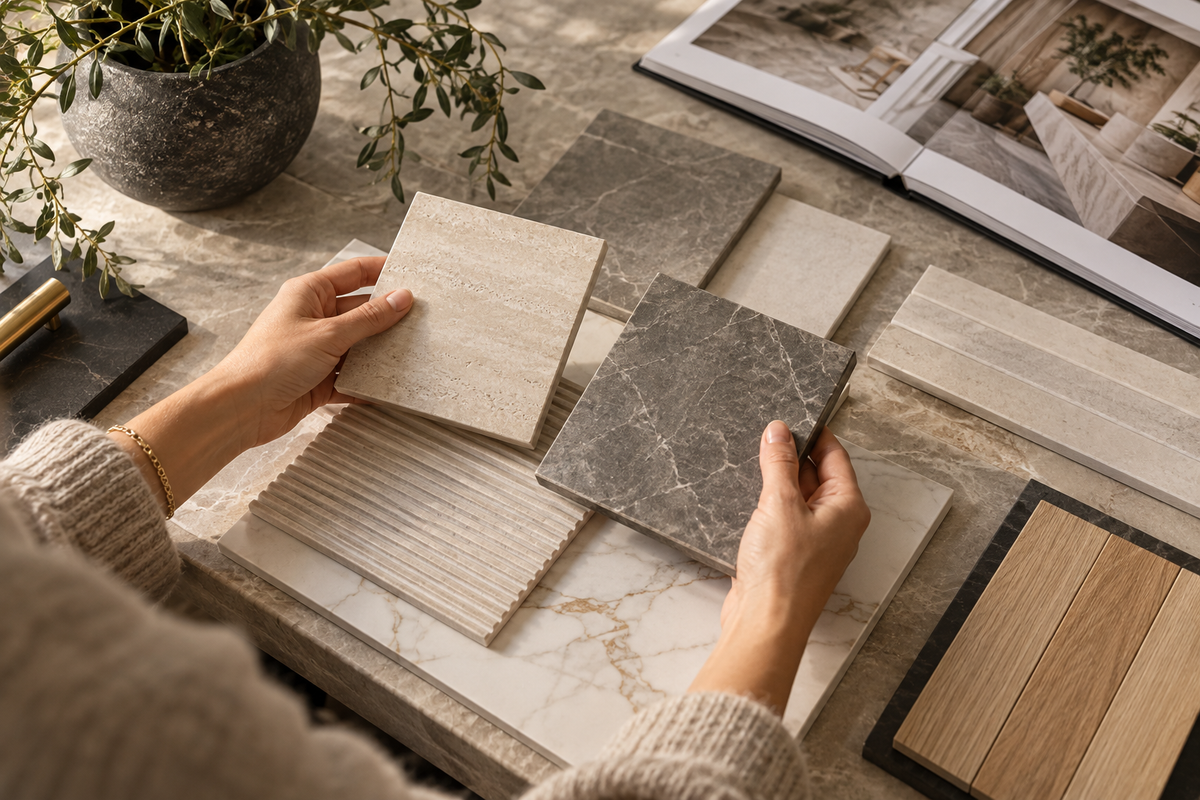
You can also compare colours, formats and finishes in person and use our Design Table to bring the different elements of your room together.
Leave a comment
This site is protected by hCaptcha and the hCaptcha Privacy Policy and Terms of Service apply.